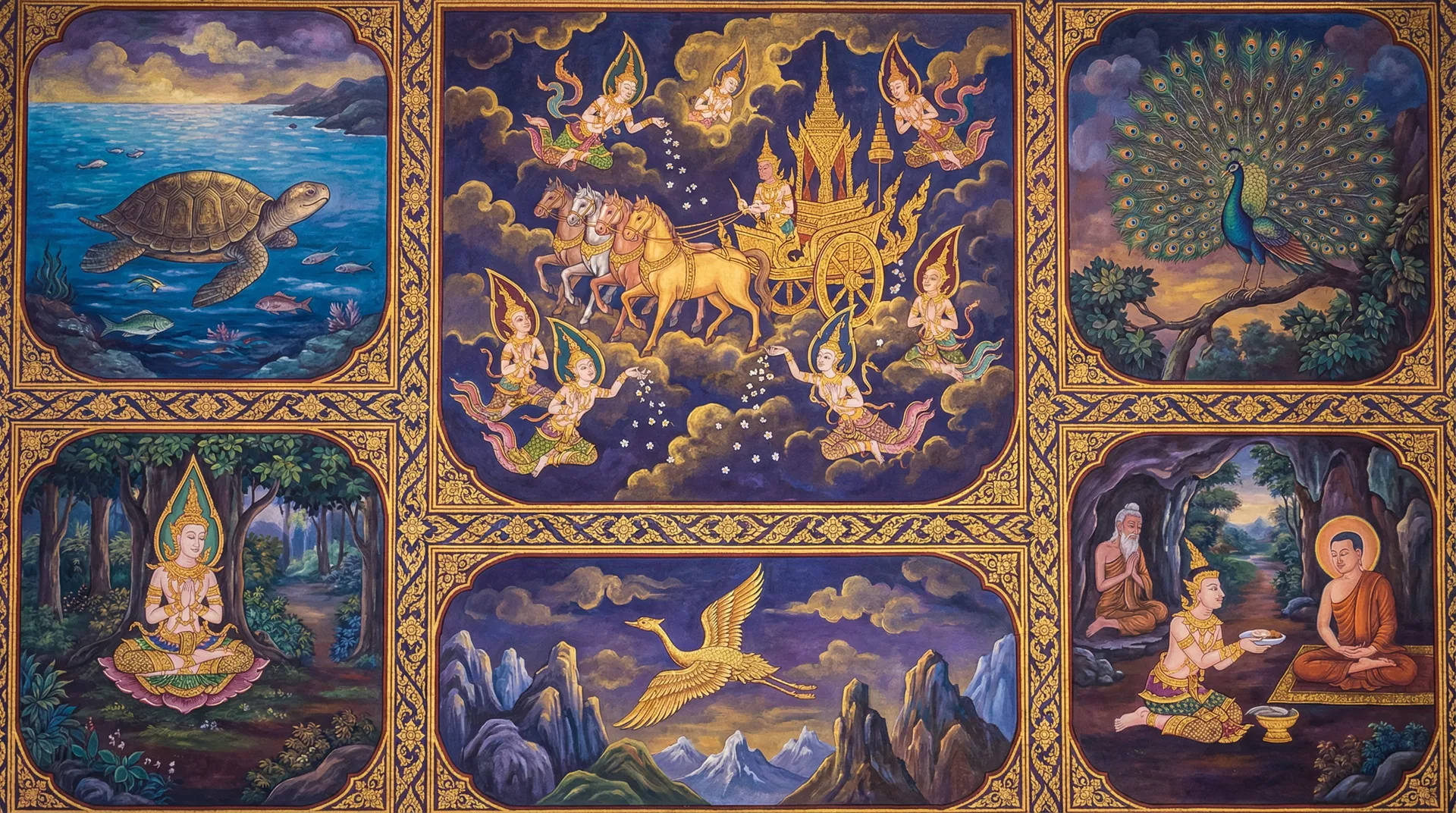
Vidhurapandita Jataka
Vidhurapandita Jataka
In the bustling city of Indapatta, capital of the kingdom of Kuru, ruled King Dhananjaya. He was a just king, but his reign was often troubled by the machinations of his wicked queen, Irandati, who was consumed by jealousy and malice. The king's most trusted advisor was a sage named Vidhurapandita, a man whose wisdom was as deep as the ocean and whose integrity was unshakeable. Vidhurapandita was not only wise in the ways of the world but also deeply learned in the Dharma, and he guided the king with truth and compassion.
Queen Irandati, however, harbored a bitter hatred for Vidhurapandita, seeing him as a rival for the king's affection and a hindrance to her own selfish ambitions. She plotted his downfall, seeking an opportunity to have him removed from the king's side.
One day, a fearsome demon king named Kala, who resided in a subterranean realm, heard of Vidhurapandita's immense wisdom. Intrigued and ambitious, Kala decided he wanted to possess the sage's knowledge. He devised a plan to lure Vidhurapandita to his realm. He transformed himself into a beautiful young woman and appeared before Queen Irandati, feigning distress.
"Oh, Queen," the transformed Kala wept, "I am suffering greatly. My life is in danger! Only the wisdom of the great Vidhurapandita can save me. If he does not come to me within seven days, I shall surely perish." He then subtly suggested that if Vidhurapandita were to come, the queen might be able to gain his favor, implying that Vidhurapandita held the key to her own unspoken desires.
Queen Irandati, blinded by her own envy and her desire to please the king (and perhaps achieve her own selfish aims through Vidhurapandita's supposed favor), eagerly agreed to the scheme. She approached King Dhananjaya. "My King," she pleaded, "a noble maiden is in grave peril. She implores you to send your wisest advisor, Vidhurapandita, to her aid. Her life depends on his wisdom."
King Dhananjaya, trusting his queen's words and his advisor's capabilities, reluctantly agreed. He summoned Vidhurapandita. "Wise Vidhura," the king said, his brow furrowed with concern, "a life is at stake. You must go to this maiden and offer her your counsel. You have seven days to fulfill this mission."
Vidhurapandita, though he suspected foul play, could not refuse his king's command. He bid farewell to his beloved wife, explaining the perilous nature of his mission, and set off. As soon as Vidhurapandita left the city, Kala, the demon king, revealed his true form and abducted the sage, taking him to his dark subterranean kingdom. There, Kala confronted Vidhurapandita. "Sage," he boomed, his voice echoing through the cavernous halls, "you are here to impart your wisdom to me. Answer my questions, and perhaps I will spare your life. If you fail, you shall be my eternal prisoner."
Kala then proceeded to ask Vidhurapandita a series of profound and challenging questions about ethics, morality, the nature of existence, and the path to liberation. Vidhurapandita, unfazed, answered each question with clarity, wisdom, and perfect adherence to the Dharma. His answers revealed a profound understanding of truth and righteousness, impressing even the formidable demon king.
Meanwhile, back in Indapatta, Queen Irandati grew anxious. The seven days were drawing to a close, and Vidhurapandita had not returned, nor had she gained any favor from him. She realized she had been duped. King Dhananjaya was distraught. He feared for his advisor's life and was filled with remorse for sending him into danger.
Just as the seven days were about to expire, Vidhurapandita, having thoroughly answered all of Kala's questions, declared, "Great Kala, I have answered all your inquiries. Now, I must return to my king. If I do not, he will suffer greatly, and the kingdom may fall into disarray."
Kala, though reluctant to let such a wise sage go, was bound by the implicit agreement. He decreed, "You have answered wisely, Vidhurapandita. You are free to go. But know this, your wisdom has saved you. Take this message to your king: that true power lies not in brute force, but in knowledge and virtue." Kala then allowed Vidhurapandita to return.
Vidhurapandita, weary but resolute, arrived back in Indapatta just as the seventh day was ending. King Dhananjaya wept with relief and embraced his loyal advisor. He learned of Kala's deceit and Queen Irandati's complicity. The king, seeing the depth of his queen's malice and her willingness to endanger his most trusted advisor, banished her from the kingdom. He then turned to Vidhurapandita, "My wise counselor, you have endured great hardship for your loyalty. Your wisdom has not only saved yourself but has also illuminated the path for me."
From that day on, Vidhurapandita continued to serve King Dhananjaya, his wisdom and integrity shining even brighter. His story became a beacon, demonstrating that true wisdom is a formidable shield, capable of protecting one from the deepest dangers and the most cunning of adversaries, and that integrity, even in the face of great adversity, ultimately prevails.
— In-Article Ad —
💡ၶေႃႈသွၼ်
ความตายเป็นเรื่องธรรมดาของชีวิต การยึดมั่นถือมั่นในสิ่งต่างๆ นำมาซึ่งความทุกข์ การเจริญสติและพิจารณาความไม่เที่ยง ช่วยให้คลายความทุกข์และอยู่ด้วยความไม่ประมาท
ပႃႇရမီႇ: ทาน (การให้) อธิษฐาน (ความเพียร)
— Ad Space (728x90) —
ၸႃႇတၵဢၼ်ၼႃႈသူၼ်ၸႂ်
 167Dukanipāta
ၵေၭၵၴၹၱၬၱၭၨ
ၵေၭၵၴၹၱၬၱၭၨ ဢႃၑၹၭၭၫၯၭ ဢၔၭၭၫၯၭ ဢၔၭၭၫၯၭ ဢၔၭၭၫၯၭ ဢၔၭၭၫၯၭ ဢၔၭၭၫၯၭ ဢၔၭၭၫၯၭ ဢၔၭၭၫၯၭ ဢၔၭၭၫၯၭ ဢၔၭၭၫၯၭ ဢၔၭၭၫၯ...
💡 ความกตัญญูต่อบุพการี เป็นคุณธรรมอันประเสริฐ และการมีน้ำใจช่วยเหลือผู้อื่น แม้ในยามที่ตนเองตกอยู่ในอันตราย ก็เป็นสิ่งที่ควรค่าแก่การยกย่อง
 148Ekanipāta
Mahasutasoma Jataka
Mahasutasoma JatakaIn the magnificent city of Indapatta, ruled a king named Pothila, whose reign was...
💡 ความรักที่แท้จริงนั้น ไม่ใช่เพียงแค่ความสุขสบาย แต่ยังรวมถึงความเสียสละและความอดทนด้วย
173Dukanipātaသၢႆၵႅင်ႉ ဢႃးလူႇ
ၵူၼ်းဢႃးလူႇ ၵေႃး ၵႂၢၼ်း ၵႂၢၼ်း ၵႂၢၼ်း ၵႂၢၼ်း ၵႂၢၼ်း ၵႂၢၼ်း ၵႂၢၼ်း ၵႂၢၼ်း ၵႂၢၼ်း ၵႂၢၼ်း ၵႂၢၼ်း ၵႂၢၼ်း...
💡 อย่าเพิ่งตัดสินสิ่งใดว่าไร้ค่า หรือไม่มีประโยชน์ จนกว่าจะได้พิจารณาอย่างรอบคอบ และสิ่งที่ไม่เห็นคุณค่าในสายตาเรา อาจมีคุณค่าในสายตาของผู้อื่น
 293Tikanipāta
Macchusaṇḍa Jātaka
The Tale of the Fish Who Saved a CityIn the ancient city of Kosala, nestled beside the vast and shim...
💡 การไม่เบียดเบียนผู้อื่น และการมีเมตตาต่อสรรพสัตว์ นำมาซึ่งความสุขและความสงบสุขที่แท้จริง
188Dukanipātaဢတုလ ၸ㐗ၵ
ဢတုလ ၸ㐗ၵ (ပေႃး ၸ㐗ၵ ဢၼ် ဢႊ ၸ㐗ၵ ဢႊ ၸ㐗ၵ ဢႊ ၸ㐗ၵ ဢႊ ၸ㐗ၵ ဢႊ ၸ㐗ၵ ဢႊ ၸ㐗ၵ ဢႊ ၸ㐗ၵ ဢႊ ၸ㐗ၵ ဢႊ ၸ㐗ၵ ဢႊ ၸ㐗ၵ ဢႊ ၸ㐗ၵ ...
💡 การให้อภัย คือการปลดปล่อยตนเอง
179Dukanipātaၵုၵ်ႉသီၵ်ႉၸေႊၵး (ၵႄႈဢႄႈ)
ႄႈၵႄႈ ဢႄႈ ႄႈၵႄႈ ဢႄႈ ႄႈၵႄႈ ဢႄႈ ႄႈၵႄႈ ဢႄႈ ႄႈၵႄႈ ဢႄႈ ႄႈၵႄႈ ဢႄႈ ႄႈၵႄႈ ဢႄႈ ႄႈၵႄႈ ဢႄႈ ႄႈၵႄႈ ဢႄႈ ႄႈၵႄႈ ဢႄႈ ...
💡 การเดินทางสู่ธรรมนั้นย่อมพบเจออุปสรรค แต่หากจิตใจแน่วแน่ มีความเพียร และยึดมั่นในคุณธรรม ก็ย่อมสามารถก้าวข้ามทุกสิ่งไปได้
— Multiplex Ad —